



Types of dairy foods and their impact on heart health
Choose unflavoured milk, yoghurt and cheese
Why is dairy important for heart health?
Dairy foods like milk, yoghurt and cheese are a good source of protein, vitamins and minerals such as calcium which is important for bone strength. However, they can also contain unhealthy fats such as saturated and ruminant trans fats which can raise LDL (bad) cholesterol levels.
The good news? Research suggests that milk, yoghurt, and cheese have a ‘neutral’ effect on heart health overall. This means that they don’t increase or decrease the risk of heart disease.
The Heart Foundation recommends that milk, yoghurt and cheese can be eaten as part of a heart-healthy eating pattern. Choosing unflavoured milk, yoghurt, and cheese also helps limit the amount of added sugar in your diet.
Butter, cream and ice cream are not part of a heart-healthy diet and should only be eaten sometimes and in small amounts.
Full-fat vs reduced-fat dairy
The Heart Foundation recommends choosing reduced-fat dairy for people with heart disease or high cholesterol. This is because the fat in dairy products can raise cholesterol levels more for these groups of people.
For the general population without heart disease, there isn’t enough evidence to recommend full-fat over reduced-fat, or vice versa. This means you can enjoy either full-fat or reduced-fat milk, yoghurt, and cheese, based on your personal preference.
Non-dairy alternatives
For people who can’t have dairy foods because of allergies or intolerances, or those who choose not to eat dairy, non-dairy alternative milks, yoghurts and cheese can be a suitable option.
Make sure to check the nutrition information on non-dairy milks and yoghurts for added calcium, and look for options with no-added sugar. If choosing non-dairy cheese, look for the lowest amount of saturated fat and sodium.
How much should you be eating?
- There is no strict minimum or maximum when it comes to dairy for heart health.
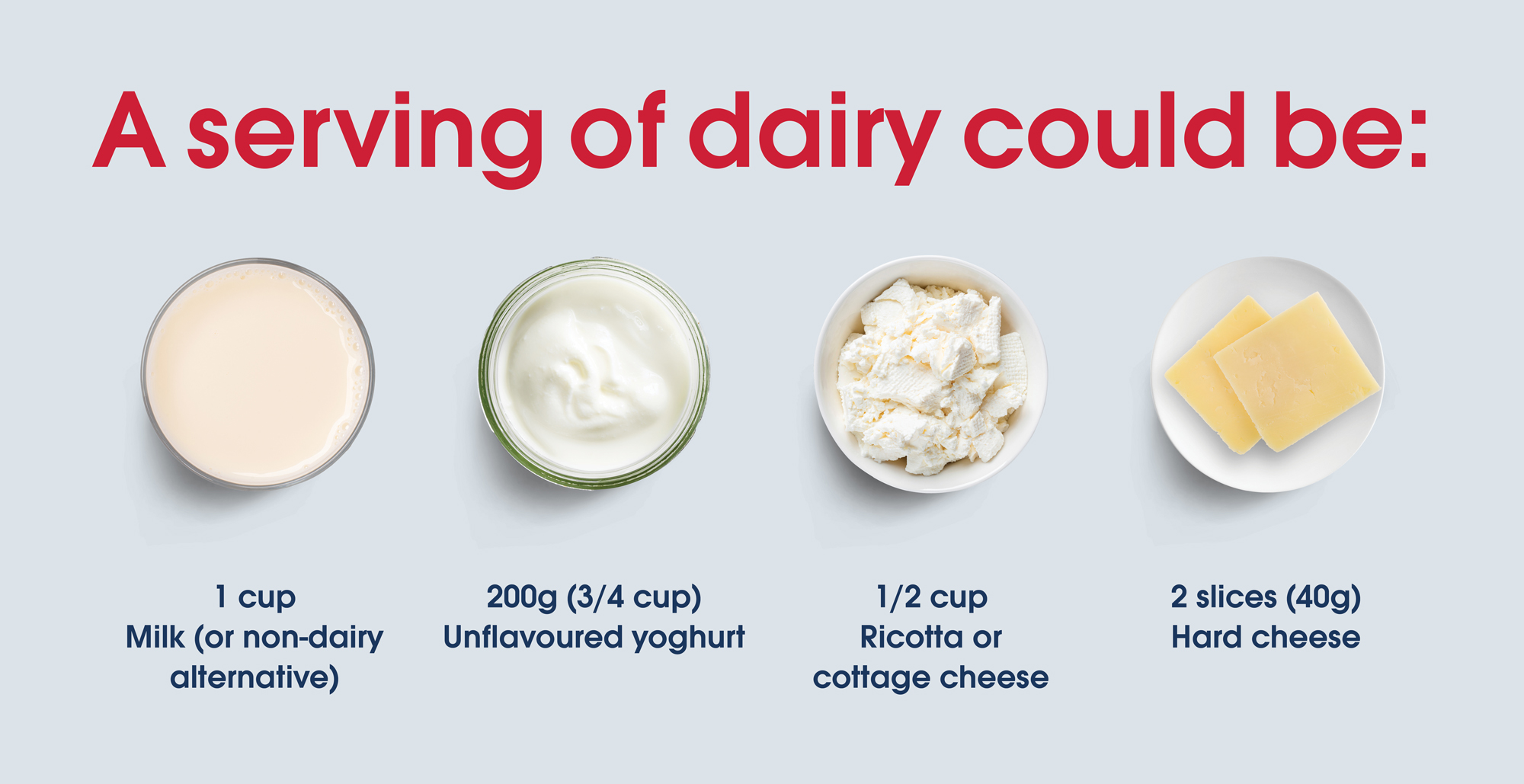
- The Australian Dietary Guidelines recommend eating between 2-4 serves of milk, yoghurt and cheese a day to make sure you get enough calcium.

Looking for more information on the science behind our recommendations?
We understand there is a lot of nutrition misinformation, and it’s important to find information from credible and trustworthy places. The Heart Foundation’s Heart Healthy Eating Pattern recommendations, and associated resources, are backed by the latest science and made with the unique needs of Australians in mind.
Curious about the evidence that informs our recommendations? Read more about our evidence reviews and position statements.
link