We include products we think are useful for our readers. If you
buy through links on this page, we may earn a small commission or
other tangible benefit. Optum Store, Optum Perks, and Healthline
Media are owned by RVO Health. Here’s our process.
Healthline only shows you brands and products that we stand behind.
Our team thoroughly researches and evaluates the recommendations we make on our site. To establish that the product manufacturers addressed safety and efficacy standards, we:
Evaluate ingredients and composition: Do they have the potential to cause harm?
Fact-check all health claims: Do they align with the current body of scientific evidence?
Assess the brand: Does it operate with integrity and adhere to industry best practices?
We do the research so you can find trusted products for your health and wellness.
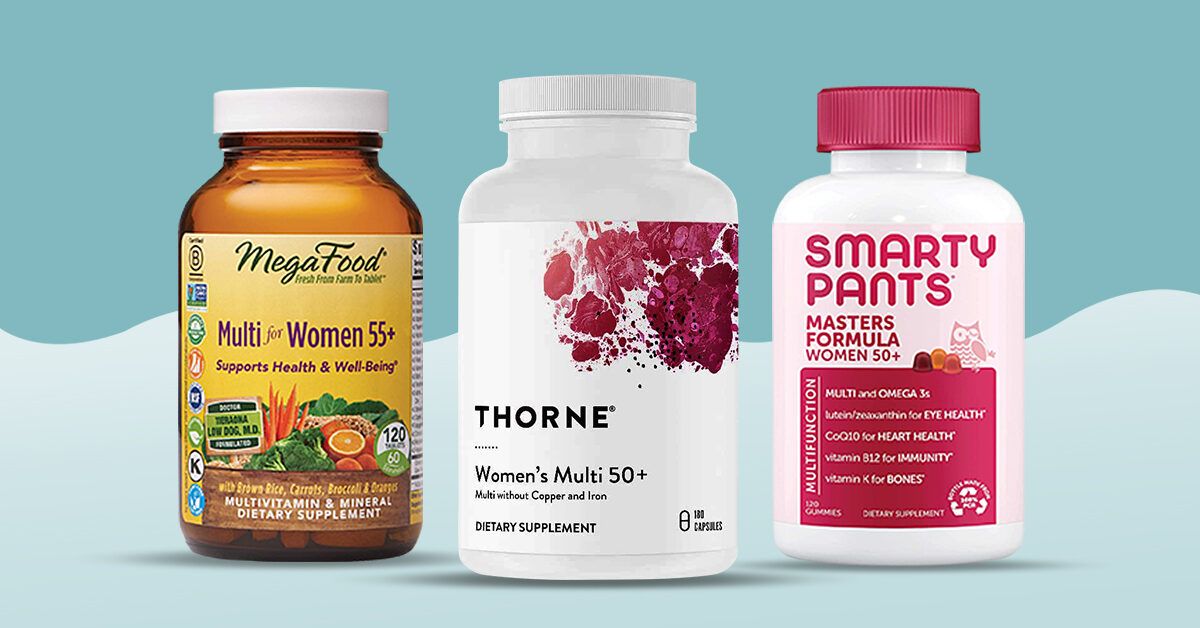
Thorne, MegaFood, and SmartyPants provide high quality nutrient support for women over 50. Read about multivitamins below and see what else our dietitians recommend.
As a woman over 50 years old, minding your health and longevity requires different nutrients than in your younger years, since your body is experiencing:
reduced nutrient absorption
metabolic shifts
declining bone density
Although it’s possible to meet most nutritional needs through diet, it may be difficult to get all the necessary nutrients from food alone. A complete multivitamin can help fill the gap, especially when it is specifically formulated for your age bracket.
A daily multivitamin can be expensive, but it may be covered by your health insurance if it is prescribed by a doctor for a specific health condition, based on lab tests. Check with your healthcare professional to find out if your coverage can help you get the best affordable multivitamin.
Here are the best multivitamins for women over 50 years old.
Disclaimer: Some of the products tested below were provided for free to Healthline editors or writers. Our opinions are ours alone and have not been reviewed, approved, or otherwise endorsed by the product manufacturers.
3 = This product has been third-party tested by an accredited lab to ensure purity and potency.
Quality standards: We prioritized products that are thoroughly tested for purity and potency, ideally by third-party labs, and included supplements that are manufactured according to the current good manufacturing practices established by the Food and Drug Administration (FDA).
Nutrient quality: We considered the types and amounts of ingredients included, as well as the bioavailability of the nutrient forms used from the information collected.
Ingredients: We chose products that are free of artificial sweeteners, preservatives, and other additives.
Brand reputation: The products below are manufactured by brands with good reputations for producing quality supplements and that provide all information about testing their products.
Price: We included the best multivitamins to suit a range of budgets.
Vetting: The products have been vetted to ensure they align with Healthline’s brand integrity standards and approach to well-being.
Because there’s no one best product for everyone, the supplements on our list are not ranked. We recommend choosing the product that best fits your dietary needs and preferences.
When shopping for the best multivitamin, it’s best to first consult a healthcare professional to understand any specific nutrient needs that you might have. Additional factors to consider when searching for the best supplements include quality, formulation, and your personal needs and preferences.
Look for products produced by reputable manufacturers and tested for label accuracy
There’s no shortage of supplement companies to choose from. Because the Food and Drug Administration (FDA) doesn’t regulate supplements the same way it does pharmaceuticals, it’s important to purchase from vitamin brands that are known for producing high quality products.
Ideally, the best supplements have been tested by accredited third-party labs, like:
These organizations help ensure that the contents of your supplement bottle match what’s listed on the label — and contain nothing more.
Look for multivitamins that are specifically formulated for women over 50
In looking for the best multivitamin for over 50, you may want to choose a supplement that contains nutrients of special importance for women in that age group, such as B12, B6, vitamin D, zinc, and magnesium. Sometimes, looking for the best multivitamin for females over 40 opens up a wider selection.
Keep in mind that women who have suboptimal vitamin D levels and those who are deficient in vitamin D may require much higher doses of this nutrient to reach and maintain optimal levels.
If you’re concerned about your vitamin D levels, have a healthcare professional test your vitamin D before taking it. Depending on your level, they can recommend an appropriate and effective supplemental daily dose.
Likewise, women who are deficient in vitamin B12 may require high dose vitamin B12 injections to reach optimal B12 levels, which is why it’s important to have a doctor test your B12 levels.
Choose a product that fits your preferences and budget
Because there are many good multivitamins available, your final decision on the best multivitamin for over 50 ultimately comes down to which product best fits your needs and preferences. Some factors to consider include:
Supplement form: Are you OK with swallowing pills, or do you need a chewable or gummy form instead?
Daily dose: Are you OK with taking multiple pills per day? Or do you prefer a one-a-day formulation?
Dietary needs: Do you follow a special diet, such as gluten-free or vegan? If so, you’ll want to choose a product that’s compliant.
Budget: Try to find a meeting ground where the best budget vitamin coincides with the one that best meets your needs. How much are you willing and able to spend on a multivitamin every month?
Availability: Do you prefer to order supplements online? Or do you want a product that you can pick up at your local grocery store?
As women grow older, their nutritional needs change.
For example, women over 50 years old require lower amounts of certain nutrients, like iron. However, they have a higher risk of developing deficiencies in several other vitamins and minerals, like vitamin B12.
Here are a few nutrients that are particularly important for females over 50 years old:
Vitamin B6: Vitamin B6 is a nutrient required for cognitive health and metabolism. A person’s needs increase with age due to decreased absorption, increased breakdown, impaired nutrient activation, and decreased intake of B6-rich foods. Studies suggest that maintaining optimal levels can help promote cognitive function and prevent cognitive decline in older adults.
Calcium: Women over the age of 50 have greater calcium needs than younger women. However, while calcium supplements could be helpful for certain women, such as those with bone conditions like osteoporosis, researchers have linked high dose calcium supplements with a higher risk of cardiovascular disease. For this reason, most women should aim to increase their calcium intake by regularly eating calcium-rich foods, like yogurt, kefir, beans, and greens.
Vitamin B12: Older adults have a decreased ability to properly absorb B12 due to a condition called atrophic gastritis. This condition involves inflammation of the stomach lining with low stomach acid excretion. Additionally, many women over the age of 50 are taking medications like acid-suppressing drugs, which can interfere with B12 absorption. Because of this, experts recommend that adults over the age of 51 years supplement their diet with B12.
Vitamin D: Vitamin D deficiency is common in older adults due to factors like reduced vitamin D intake, less time spent outdoors, and decreased vitamin D synthesis in the skin. Vitamin D deficiency can negatively affect physical and mental health by increasing the risk of depression, osteoporosis, and several other conditions. The current recommended daily allowance (RDA) is 600 international units (IU) of vitamin D per day for adults ages 51 to 70 years and 800 IU for adults over 70 years. The best multivitamin for women over 70 contains larger amounts of vitamin D, since the body’s ability make vitamin D decreases with age. Many experts agree that most people require higher than the recommended doses of vitamin D to maintain optimal levels of this critical nutrient.
In addition to the nutrients listed above, there are several other vitamins and minerals that are essential to health among older females, including zinc, manganese, and magnesium.
Studies show that systemic inflammation, which is more common in older age, can deplete levels of several micronutrients, including zinc and manganese, which may impair the body’s ability to fight off pathogens and maintain a strong immune response.
While there are other nutrients that are important for aging women, choosing a multivitamin with the vitamins and minerals listed above can increase your chances of meeting most of your micronutrient needs.
Do women over 50 need supplemental iron?
Most women over 50 years old have stopped getting their periods, which reduces the body’s need for iron due to less blood loss. Because of this, most women over menopause don’t need to take supplemental iron, which is why supplements specifically designed for older women are usually iron-free.
However, it’s important to talk with a doctor to determine your iron needs. Some women, such as those with iron deficiency anemia, may need additional iron.
If you’re experiencing menopause-related symptoms, like hot flashes or sleep disturbances, some supplements may help.
For example, black cohosh, which is found in Garden of Life Organics Women’s 40+, has shown promise in decreasing certain symptoms of menopause, including hot flashes, when taken as a supplement.
Evening primrose oil is another example of a natural ingredient that may benefit women experiencing symptoms of menopause. Evening primrose supplements have been shown to be effective for reducing night sweats in women going through menopause.
Other herbs and compounds that may improve menopause symptoms include maca, wild yam, and pollen extract.
It’s important to note that you should not take supplements for menopause symptoms unless you clear it with a healthcare professional first. Many ingredients, like herbs, have the potential to interact with certain commonly prescribed medications and aren’t safe for everyone.
Also, if you’re experiencing significant menopause-related symptoms, it’s important to make an appointment with a healthcare professional. You should not use supplements as a replacement for medical care, and some women may require medical treatment, like hormone replacement therapy, to feel better.
Although many women can benefit from a multivitamin, some women over 50 years old may need a more specialized supplement regimen.
For example, if you have nutrient deficiencies, have an underlying health condition, or take one or more medications, it’s best to seek supplementation advice from a healthcare professional who understands your personal information.
It’s also important to get appropriate care from a doctor if you’re experiencing symptoms like:
very low energy
unintentional weight gain
unintentional weight loss
gastrointestinal symptoms, like bloating or abdominal pain
While supplements may help you feel better in some ways, they’re not a substitute for medical care and should never be used in place of medications.
Women ages 50 years and older require adequate intake of:
It’s important to consider that nutritional needs change with age.
For example, women older than 50 years may have a higher risk of deficiencies in vitamins B12 and D, but they need less iron. They require more calcium, but there may be risks with taking too much in supplement form.
It’s always best to talk with a healthcare professional for specific recommendations based on your personal information.
You can take multivitamins at any time of day, but it’s always a good idea to take them with food, as some nutrients’ absorbable forms require other nutrients found in foods, such as fat.
The best multivitamins for over 60s might focus more on bone health, featuring higher amounts of calcium and vitamin D. The best multivitamin for women over age 60 could also include higher doses of B vitamins for cognitive function.
We like the MegaFood multivitamins, like the MegaFood Women 55+ Advanced Multivitamin.
Multivitamins designed for women over 50 years old are generally safe when taken as directed. However, in some cases, they may cause mild side effects, including gastrointestinal discomfort such as nausea or diarrhea, especially if taken on an empty stomach.
Taking multivitamins with a meal can help minimize these issues, but follow the recommended dosage and consult a healthcare professional before taking any new supplements.
While it’s possible to obtain essential nutrients through a balanced diet, multivitamins may be a useful supplement for women over 50 years old if they aren’t getting their nutrient needs through diet alone.
Additionally, aging often causes changes in nutrient absorption and metabolism, which could make it challenging to meet all nutritional needs solely from food.
That being said, individual nutritional requirements vary, so it’s advisable to consult with a healthcare professional before making your choice to determine if a multivitamin is right for you and to receive personalized recommendations based on your specific health needs.
Women over 50 typically do not need as much iron as when they were younger. However, this may not be true for everyone. It is best to consult a healthcare professional to make sure your iron levels are sufficient since it can help prevent anemia.
methylWe rated Thorne Women’s Multi 50+ as the top multivitamin for older women, but there are many effective multivitamins available today. The most effective one ultimately is the one that best meets your needs and has the green light from your doctor or dietitian.
The best multivitamin for you will also fit your budget and cause the fewest side effects or interactions with your other medications.
Choosing the right multivitamin can be challenging as nutritional needs evolve with age, and not every woman over 50 needs a multivitamin.
If you choose to use a multivitamin, it’s essential to look for one that is tailored to your age and sex and addresses specific needs, such as bone health or heart support. Lastly, it’s wise to consult with a healthcare professional to ensure your chosen product aligns with your needs.