Community Health administrators recall recovery from southside cancer center fire


Community MD Anderson Cancer Center South is pictured Sept. 29 in Indianapolis. Noah Crenshaw | Daily Journal
The task before Community Health Network administrators was Herculean.
After a welder’s torch ignited a fire inside a construction area at the Community Health Network MD Anderson Cancer Center South this past May, staff members had two complex questions on their minds: where would their patients go now and how long would it take before they and their patients would be back inside the southside cancer center. Luckily, they didn’t have to wait long for the answers.
Quickly, other Community Health Network facilities opened up spaces for southside cancer patients to be seen. Staffers, nurses and doctors worked quickly to explain the situation to patients and get them rescheduled at other facilities. Administrators and construction workers worked quickly to fix the fire-damaged areas of the cancer center and the construction site for its expansion.
This all paid off. The damaged areas of the center not under construction were repaired in less than three months, and nurses and doctors were seeing patients inside the center again by mid-July.
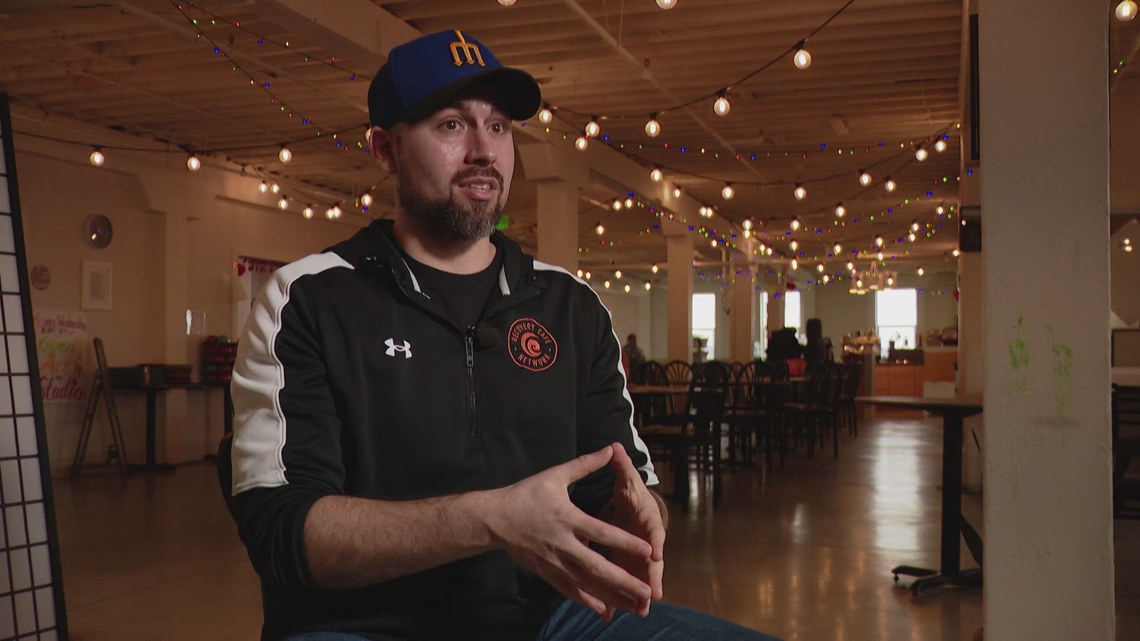
“It was amazing how everybody came together — the patients, the caregivers, the providers,” said Erik Bare, executive director of oncology for Community Health Network MD Anderson Cancer Center South.
The fire
The fire that damaged the cancer center, 1440 E. County Line Road, Indianapolis, started on the exterior of the west side of the building, which is being expanded to double its size, between 2:30 to 2:45 p.m. May 9. The blaze produced heavy black smoke visible for miles, according to the Indianapolis Fire Department.
No one was hurt. About 75 people, including employees and eight patients, were evacuated from the building and relocated to nearby Community Hospital South for shelter during the blaze, firefighters said.
One of the employees present during the fire was Bare. He was in his office when the fire alarm went off, and when he left he could see smoke from the fire. He and other leadership staffers went through the building to make sure people understood it wasn’t a drill, he said.
All of the caregivers had already responded quickly, and everyone was out of the building. The fire was quickly put out too, Bare said.
The fire did not actually enter the sections of the building that weren’t under construction. However, there was smoke and water damage inside, he said.
Gretchen Diallo, medical oncology nursing manager for the southside cancer center, was off work the day of the fire. She couldn’t believe it when her charge nurse called to tell her of the blaze.
“I just thought she meant, like, there was an issue and she’s like, ‘No, Gretchen, there’s an actual fire,” Diallo said.
Diallo hopped in her car and drove to the center. Everyone was already evacuated, and she credits her charge nurse with doing a “phenomenal job” of making sure she had a list of everyone inside their area and making sure they were accounted and cared for, she said.
Diallo recalled moving patients over to the Community Hospital South after a supervisor came and told them a conference room was available. Maintenance workers brought over wheelchairs for staffers to push patients over to the hospital, she said.
“It was managed as well as I think it could have been in the moment,” Diallo said.
Incident command
One of the first actions from Community Health administrators was to set up an incident command with Community Health leadership and stakeholders to decide how they were going to take care of their patients, Bare said.
“We all have a focus on putting our patients first, that’s something Community is big on,” he said. “And so we really wanted to ensure that patients continued to get the best care, but also got it as much as they could in a convenient location.”

Diallo remembers constantly being on the phone with other cancer center managers and Marcy Jones, Community’s vice president of oncology nursing services, the weekend of the fire as they worked to notify patients of what happened and to figure out what to do.
Community administrators quickly set up care sites on at Community Hospital South or other southside facilities for medical oncologists and most of their surgeons to see patients, with the oncologists seeing patients within a week-and-a-half after the fire. However, they had to move many of their treatments to another Community campus, Community Hospital East, as the southside hospital didn’t have the space available at the time, Bare said.
“We shifted patients to our East hospital to get their medical oncology infusion treatment,” he said. “They actually were able to give us almost an entire unit, and we shifted all of our infusion chairs and staff and providers physicians to a unit at East and we were able to get get them chemotherapy treatment within a few days. Before that, we were doing it in our cancer centers, working extended hours for that couple days before we got that unit set up.”
There were a lot of moving parts. For instance, staffers had to move try to move and clean up salvageable from the southside cancer to Community Hospital East, get supplies and equipment, and sure staff is up to date on what’s going on and where they need to go, Diallo said.
“It was a lot of moving parts, but, by some act of God, we were actually able to have that cohort unit up and running by Wednesday, [May] 14th, so only two days post-fire really,” she said.

The Monday and Tuesday that week, the north and east cancer centers saw the south center’s patients. But even after the cohort unit opened, they still helped out the southside cancer center with infusions because they didn’t have the same amount of space, Diallo said.
A similar process happened for radiation oncology too. These oncologists require big pieces of equipment called linear accelerators, which cannot be setup quickly. So, administrators shift the southside cancer center’s radiation oncology clinics to Community facilities on the east and and north sides of Indianapolis, Bare said.
“It was really just a coordination of care, setting up an incident command, and just really working with the entire network to find sites of care for patients,” Bare said.
As staffers worked to shift services and patients around, there were a lot of moving parts. For instance, they had to move try to move and clean up salvageable from the southside cancer to Community Hospital East, get supplies and equipment, and ensure staff is up to date on what’s going on and where they need to go, Diallo said.
“It was a lot of moving parts, but, by some act of God, we were actually able to have that cohort unit up and running by Wednesday the 14th, so only two days post-fire really,” she said.
Fixing the building
With the patient portion of the situation handled, focus turned toward fixing the damaged areas of the cancer center. The hospitals facilities team, along with construction project managers, stepped in to help coordinate the recovery. Bare recalls being in the building almost every day after the fire with the project manager for the construction, with both men making sure the contractors were working quickly, he said.
“It honestly was a lot of meetings, but also just a lot of being here and just making sure that we were all on the same page,” Bare said.
They also set a goal for reopening the cancer center to see patients: three months. They hit that almost exactly when it reopened July 21.
“I’m just really, really proud of that with the amount of damage because we had extensive water damage; there were areas in the building that had ankle deep water in it at one point, and then the smoke damage was extensive, especially on our second floor,” Bare said. “It moved really, really quickly. It didn’t feel like that at the time, obviously, but it moved very, very quickly.”
The total cost of the damage and recovery isn’t yet known, as the cancer center is still working with its insurance on this and still having costs come in even now. However, Bare estimates that its at least in the tens of millions.
The fire also didn’t slow down the center’s $60 million expansion either. It’s still on track to finish by the end of 2026, which was made possible by the building being closed for a time, Bare said.
“We were able to do a lot of the things in the building that were going to be hard to do when we were operational, such as HVAC work, some different electrical work, sanitary work, we were able to get those done with nobody in the building, and so we were able to maintain the schedules,” Bare said.
Grateful
One good thing that came out of the fire in Diallo’s view was nurses’ abilities to work with SPARK students. SPARK is Community program that gives nursing students hands-on experiences working with and observing nurses.
After the fire, hospital staffers reached out to the SPARK students to see if they would help in the temporary clinics. Many did, she said.
“I really think that that ended up being a good thing,” Diallo said. “That’s building relationships, not only with that team, but helping those future nurses in the perspective of what oncology services are and if it’s something they want to do in the future.”
Bare is grateful for those at other Community facilities who “bent over backwards” to come together and help the southside cancer center in the aftermath of the fire. Everyone had their own patients and struggles with spaces and staff, but came together to put all patients first, he said.
“I’m just amazed. I’ve never, in my career, and I worked for a few different hospital systems, seen this kind of collaboration and this kind of teamwork to just make sure that there wasn’t interruptions in patients’ care,” he said.
Diallo feels similarly. There were many moving parts and it was “quite extraordinary” and amazing to see so many people throughout Community reach out and offer assistance. Even volunteers would send a morale booster email each week, she said.
He’s also grateful for patients’ flexibility during the closure. They had to be asked to go to different sites, and Community provided resources to help in different ways — gas cards or rides through Mabel’s Ride, the health network’s free round-trip transportation service for oncology and certain cardiology patients that brings them from their homes to their healthcare provider or pharmacy and back.
Bare doesn’t recall ever having a complaint reach him as far as the fire goes, he said.
“It was amazing how many people just kind of understood what was going on and this is what we have to do and worked with us,” he said.
Patients were understandably shocked at first, and there was some confusion early on when it came to communication based on some automatic alerts that were sent out. But once this was fixed, what Diallo mostly heard was gratitude from patients who were thankful they could still get treatment, she said.
“Driving to East wasn’t their favorite thing, but they were much relieved when they showed up at East and … the same care team that was taking care of them at South was now at East taking care of them,” Diallo said. “I think that that really put a lot of patients at ease, knowing that it was the same team still taking care of them.”
link