Maine Recovery Council approves $13.9 million in projects
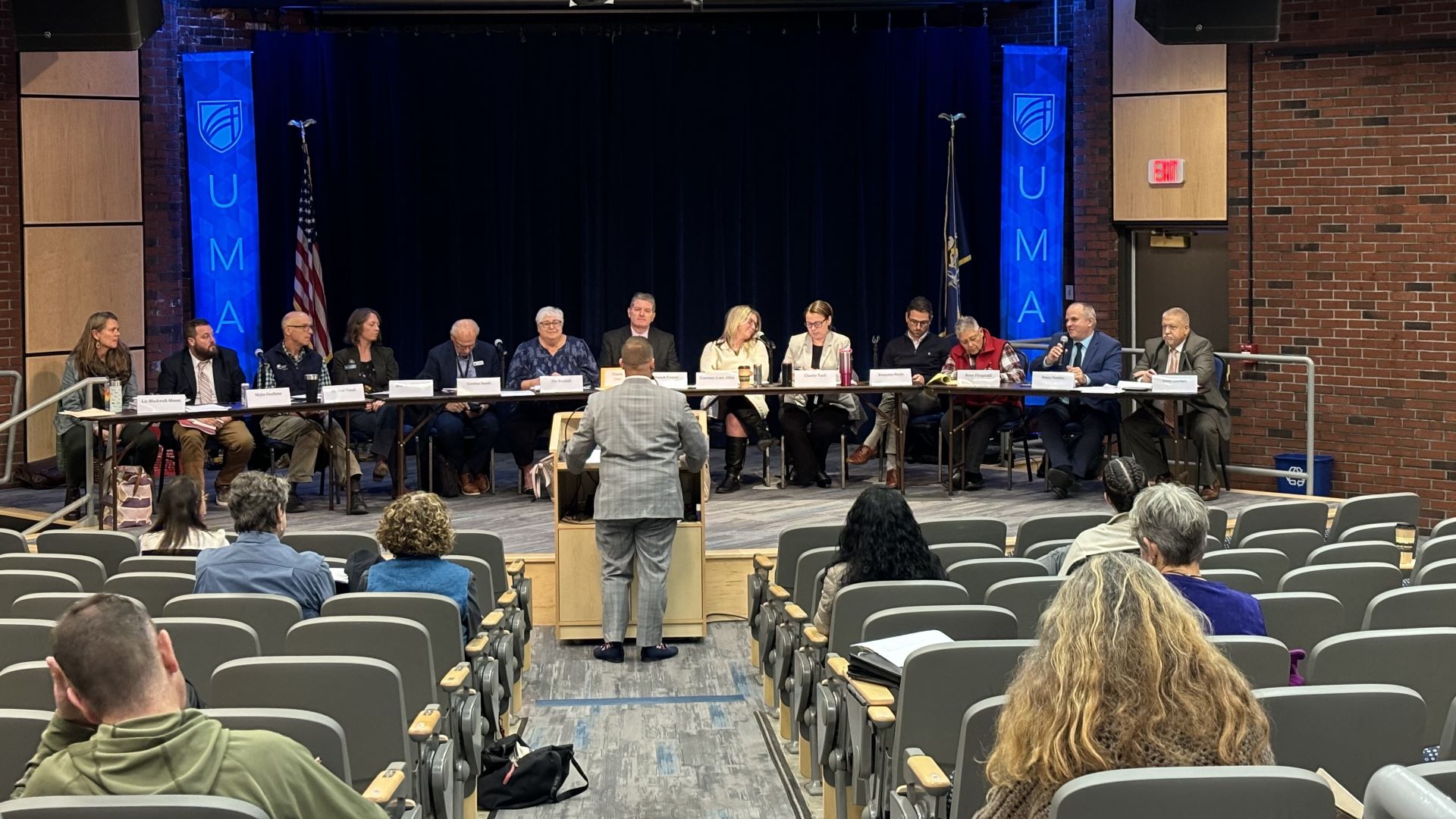
The Maine Recovery Council on Tuesday approved a $13.9 million funding package for 43 projects statewide, its largest and most comprehensive allocation since it first met two years ago.
The 15-member Maine Recovery Council is tasked with overseeing the distribution of half of Maine’s $230 million share of opioid settlement funds over 18 years. The national settlements are the result of years of litigation against pharmaceutical manufacturers, distributors and retailers accused of fueling the epidemic.
The council launched a community grants application in May after months of discussion over spending priorities, focus areas and desired spending outcomes. This funding cycle covers two years and is for projects that meet the priority strategies outlined in three of the council’s four pillars: treatment, recovery support and harm reduction.
Grants for the fourth pillar, prevention, will likely come next year. An ad hoc working group led by council member Liz Blackwell-Moore, Cumberland County’s public health director, and nine other people working on substance use issues from around the state, developed priority strategies over five months and presented recommendations to the full council last month.
The council received 220 letters of intent in June and invited 168 of those applicants to submit a full proposal. The council received 127 grant applications in total, all of which were reviewed and scored by at least three people. The scorers included council members and volunteers.
Applications were scored on six categories: priority strategies, use of funds, organization capacity and scope, project outcomes and goals, measures of success, and budget.
The council’s coordinator, Mary Coyne, divided the applications into five tiers based on their average scores. Over the course of two meetings this month, the council discussed and voted on each application from the two highest-scoring tiers.
But with minutes left in the last meeting, the group had approved just 29 applications and had more than $4 million left in the budget for this funding cycle.
Council members Courtney Gary-Allen and Gordon Smith then introduced a supplemental funding package for an additional 14 projects from lower-scoring tiers, and it was approved, bringing the total funding this round to $13,901,879.
Smith, who serves as the state’s director of opioid response, said that he and Gary-Allen, the executive director of the Maine Recovery Advocacy Project, realized this time crunch might occur and thus spent hours putting together a funding package and speaking to other members individually in the days leading up to the last meeting.
Freedom of access laws say that a meeting of three or more officials must be open to the public and have appropriate advance notification so it was not possible for the programs and grants committee to meet between the Nov. 14 and Nov. 19 meetings, he said.
“You do not have the time, honestly, to look at all applications,” Smith said. “It may sound a little heavy-handed, but we were up against a very time-driven process with the council going out of business like tomorrow, and us wanting to get as many of these projects approved as possible.”

Pat Kimball, who chairs the council, said she spoke with Smith before Tuesday’s meeting and told him she was concerned about the public perception of the supplemental funding package, noting that the council needed to be consistent in how it chose projects and to be able to justify those decisions. Ultimately she said the council had to ensure that it was following its mission to save lives, fill gaps in rural services and distribute money evenly among the pillars.
Blackwell-Moore said she was glad that projects from organizations such as Wabanaki Public Healing and Wellness, for its substance use treatment program in Penobscot County, and Gateway Community Services, for its recovery support programs for immigrant and BIPOC communities in Androscoggin, Cumberland and York counties, ended up being added to the supplemental funding package even though they didn’t score as high as some of the other projects. The council had said it wanted to make sure it funded projects focused on underrepresented groups.
Treatment, recovery support, harm reduction
The grants ranged in sum and scope from $1 million to Wabanaki Public Health and Wellness for their Wabanaki Health and Recovery program to $15,000 to Maine Pretrial Services for adult treatment recovery courts.
York County will receive $300,000 to help build a treatment center. In Washington County, Healthy Acadia will get more than $400,000 to support Safe Harbor Recovery Residence, a five-bed home for women with children in Machias.
Other awards include $500,000 to Lifeline, Addiction and Recovery Services (which is owned by council member Myles Ouellette, who abstained from the vote) to establish a methadone clinic in Aroostook County; $700,000 to Maine Family Planning for mobile treatment and harm reduction services in the Lewiston/Auburn area; $80,000 to the Portland Fire Department for Project Lifeline, its partnership with MaineHealth Maine Medical Center to provide perinatal and substance use treatment and care to pregnant and postpartum patients who use drugs; and $20,800 to Lifeline for ME Recovery to hire a house manager for Summit House, a recovery residence in Farmington.
Also among the awards is $150,000 to support Opiate-Free Island Partnership’s syringe service program in Deer Isle and Stonington in Hancock County, which was previously certified under Bangor-based Health Equity Alliance. The Maine Center for Disease Control and Prevention recently suspended certifications for all of HEAL’s program sites, which include Bangor, Ellsworth, Rockland and Deer Isle, after the group laid off nearly all of its staff.
The Secretary of State’s office also briefly dissolved HEAL’s nonprofit corporation earlier this month because it failed to file an annual report. The Maine CDC will reevaluate the group’s status on Dec. 16 when its “restructuring period ends,” according to records obtained by The Maine Monitor. While the Opiate-Free Island Partnership program can continue to operate without this certification, it no longer has access to HEAL’s CDC funding.
The council approved projects in all 16 Maine counties, as well as statewide projects. In total, $4.8 million will go to 12 projects focused on treatment, $5.9 million to 22 projects focused on recovery support and $3.2 million to nine projects focused on harm reduction.
The council will discuss a timeline for contracts in January, Kimball said.
Slow going
Since its first meeting in November 2022, the council has at times struggled to find momentum. It held its first public forum a year later, and made its first major spending decisions in December 2023, when it approved a $9 million, two-year funding package for organizations working on treatment, recovery support, harm reduction and prevention.
The process of getting that money out the door has been slow going. Many of the contracts for those organizations are still in the works. And while some money — such as $500,000 to build a new recovery center in Piscataquis County, which is already up and running — has been distributed, much of it is still tied up in paperwork.
Contracts with the 10 Maine CDC-certified syringe service program operators, which run 19 sites statewide, have been signed, Kimball said. Each site is set to receive $75,000 a year for two years. (The attorney general’s office has not signed its contract with HEAL because the Maine CDC suspended its certification, but Kimball said the group will still be eligible to receive the funds if the suspension is lifted.)
Contracts with other recipients, including the Peter Alfond Foundation, Maine Youth Action Network and community action programs statewide, are also in final stages, according to the assistant attorney general Brendan O’Neil.
As the council spent months debating the process and criteria for a grant application, it received numerous funding requests from non- and for-profit organizations and government agencies, all of which described a desperate need for money to keep services available. The council has largely rebuffed those requests, saying it could not approve anything until everyone had an equal opportunity to go through the grant application process, which it launched in May.
Kimball has repeatedly defended the council’s pace as deliberate, but acknowledged that it has been a “struggle getting contracts out.” She added that the grant process was a “challenge.”
“We are grossly understaffed,” Kimball told The Monitor.
Council members are there on a volunteer basis. Coyne, the coordinator, has a temporary contract that ends in January and is the only full-time staff member. The council hired BerryDunn, a consulting firm, to aid with the grant process, and brought on a freelance consultant to develop a staff structure that includes an executive director position and possibly an assistant, Kimball said.
“I think we felt, in general, good about our work, but there’s always this part that says, ‘But there’s more to do,’” Kimball said of wrapping up the grants, noting that it was tough to “say no to some really good projects.”
Tuesday’s votes mark the last meeting of the current council. While most members are staying on for another term, five members — Rep. Lydia Crafts, Myles Ouellette, Dr. Kinna Thakarar, Sanford Police Chief Eric Small and Courtney Gary-Allen — decided not to return. Members are limited to two consecutive two-year terms.
Members are appointed to the council by the litigating subdivisions, the governor, the speaker of the house, the president of the senate, and the attorney general. The council must include an individual or family member impacted by the opioid crisis; an individual with lived experience with substance use; a treatment or prevention public health expert; a medical professional with experience providing medication-assisted treatment; someone representing reentry services and formerly incarcerated individuals or their families; someone representing a nonprofit mental health treatment provider; and someone representing the harm reduction community.
Kimball said the new members will be announced at the council’s next meeting on Dec. 12 at the University of Maine at Augusta.
link